

The History of CoDA
A personal blog by Lynn Dulledge, from the very beginning....
Roy's involvement with the shelter actually started before CoDA was formed. We had a small sausage dog called Bonnie who was bitten by either a snake or scorpion. Sadly nothing could be done to save her, and she passed over the rainbow bridge.
Our vet in Didim told us that if we wanted another puppy, we could get one from the animal shelter. At that point we had no idea that there was a shelter. The vet gave us the phone number of a lady called Val who was a volunteer at the shelter. We called her and went to visit the shelter the following Sunday.
Little did we know that this was about to change our lives. On arrival we could see 4 big paddocks each with a shed inside. There seemed to be hundreds of tiny puppies without a mother dog in sight. I went into the pens to try and chose a puppy. It was so very sad. There were just so many to choose from.
Eventually I picked up a teeny tiny puppy and decided that was the dog for me. In the interim, Roy had been talking to Val about the shelter and her work there. On hearing the plight of Turkish Street dogs in general, Roy immediately volunteered to join the walkers on the following Sunday. Walking every Sunday very quickly became walking every Wednesday and Sunday.
That was back in 2014.
Life then became quite doggy involved, and before long we had started to help a lady in Akbük who fed the street animals. In 2016, Val moved to Bulgaria and she asked Roy and I alongside 2 of the other volunteers to take over. Roy and I were to be in charge of finances, and the other two people agreed to organise the volunteers.
Initially, things were fine, but soon there were big differences of opinion in terms of how money should be spent, and how things should be in general. It became impossible for Roy and I to stay, so we decided to leave the group and to take a big step back.
That was early 2018.
Before long we realised how much we missed the dogs and decided to set up another group of volunteers. We reached out to friends, spoke with the shelter, and decided to walk on the two days that the other group were unable to cover. So, with the two walking days decided, and a small group formed, we needed a name. On chatting to our daughter, she asked us to sum up exactly what our aims were. Hence CoDA: Care of Didim Animals was born.
We stayed as a small group for a while. There was Roy, Colin, and myself in Türkiye and our CoDA UK team that comprised of Dianne Toohil and Denise Harris. We held table top sales to cover the costs of feeding the Akbük street dogs, but our main focus shifted across to those dogs at the shelter with health issues. We would support them medically, whilst our UK team would help raise money so that the dogs could be rehomed and transported to the UK. Not only did they find people willing to adopt, they also did home checks and follow-up visits.
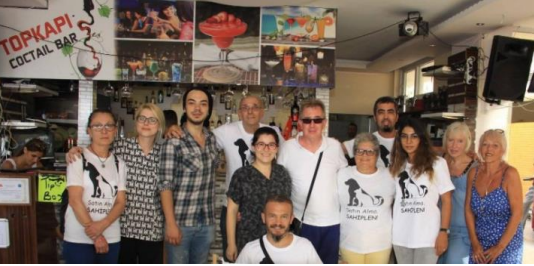
Our first fundraiser as CoDA was on October the 4th 2018, World Animal Day. We were raising money for a dog called Polly. Polly was the first really sick dog that we helped. Polly had leishmania.
Dianne and Denise still support us now.
In the early days, CoDA was rescuing 5 or 6 dogs at a time. Initially we were going through fosterers, but then we were given information about a man called Mammout. He had a place not far from Bodrum airport, so we started to board dogs there. Our first five dogs going to the UK went via Bulgaria. We were using a minibus with the seats removed. There was a driver, five dogs, five handlers, a vet, and me. We drove to the Turkish side of the Bulgarian border. We were met by two ladies who were going to drive the dogs over the border. As the dogs were in my name I had to accompany them. Once the paperwork had been cleared, I then had to cross back over the border on foot. With my exit stamp still wet, I faced many questions: where is your car? Where is your luggage? Where are you going? I told them that I was living in Türkiye and that I had just been visiting friends who were on holiday in Bulgaria. It worked! Thank goodness.
That was the one and only time. After that we found a pet transport company that was allowed into Türkiye.
By now we were beginning to get a good reputation for rescuing dogs and requests were coming in to assist dogs from other regions of Türkiye.
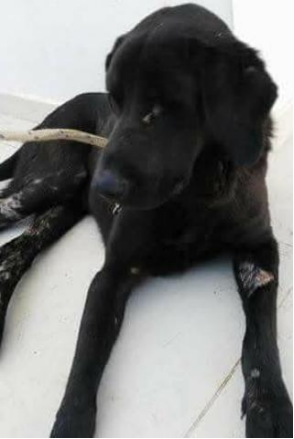
There was Arap, a black labrador from Zongüldak, the mountainous region of Istanbul. He was covered in mange and had had a broken hip that had set itself wrong. Nezih is an orthopedic veterinary surgeon, he removed the ball joint that had set out of place, and pushed and bound his leg and hip. Naturally his muscles and sinews secured the joint. Arap was adopted and went to live in the UK, where he enjoyed being a typical labrador swimming and running.
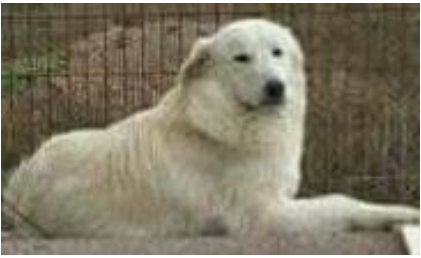
Also there was Blondie, a white dog that had befriended Peter, a guy working for Siemens on the wind turbines in Bergama, Izmir. Peter couldn’t bear the fact that his job in Turkey was coming to an end and that he would have to leave Blondie to fend for himself. Both dogs were brought to Didim, treated at Furry Friends and then went to stay with Mammout for 4 months before proceeding on to their new lives.
There was never a dull moment in those early days, but we were a lot younger then! Little did we know how many dogs that we would actually go on to rescue. It isn't until we sit back and we reflect, as we are doing now, that we realise just how many there have been.
Behind the scenes
None of us are qualified in anything animal related. We have been very lucky to have found Turkish people who have supported us along the way. We have gained vast knowledge that we have been able to share in the form of advice.
Leishmania was our first hurdle. Polly was diagnosed with this dreadful disease. The only drugs for this disease were not available in Turkey, leaving only two dreadful options; a long painful death or euthanised. As far as we were concerned there had to be a solution. So
Ceren our young vet made use of the drugs that were available here in Turkey. She made a protocol to be followed strictly. After one month Polly had made remarkable progress. Leishmania isn’t curable but it is manageable if caught early enough and treated correctly. Leishmania attacks the vital organs, kidneys and liver. Ceren has gone on to use her protocol and give many dogs a longer life.
The next breakthrough came when two puppies were taken from the shelter for adoption. Not long after they had left the shelter, they became ill. Tests done, Distemper. Once again, all drugs had to be imported, at a cost, so put to sleep was the best option . We refused to
believe that. Between us we googled, and researched. Then we stumbled upon a cure - faecal transplant treatment, previously only used in cattle but worked. Ceren contacted her professor from university. He had read about it but never done it. So Ceren did the treatment by video link and the professor used it as a study with his students. It was the faeces of a healthy dog put into the bowel of the sick dog. Good bacteria fighting bad. The treatment was administered every other day for 10 sessions. We had to go home and wait one month, then have the test again.
Waiting was the hardest part, after one month we went back ... the tests were redone and we waited. That 10 minutes was the longest ever. But it was definitely worth the wait ... both puppies were distemper negative. There wasn’t a dry eye in the clinic, as we all cried with joy. We can’t tell you how many lives have been saved using this technique.
There are two types of distemper, digestive and neurological. Sadly there is no cure for the latter and put to sleep is the only option.
The next thing was mange. A horrible disease caused by a low immune system. When the dog was at its lowest, the mite attack, leaving the dog with no fur and very itchy skin. We started bathing afternoons at the shelter, along with the vets and veterinary nurses. Each dog was applied with a lotion. It had to soak in for 10 minutes then it was rinsed off. Then an ivectermin vaccination or nexgard tablet was given. The kennels and cages were bleached while the dogs were having the treatment.
Away from the medical side, and because we were asking for people to adopt, we were being asked how can we adopt to the UK. We had no idea, so with the help of Eylül, Furry Friends we learned. Being foreign didn’t help us either, it came with many obstacles. But she helped us overcome them. And when all else failed, Nezih also from Furry Friends, accompanied the dogs and their owners when they had to go to the state vet for the animal health certificate.
More recently there has been big changes in the rules and regulations re adopting a dog in Turkey, the young lady at the shelter, Ayşegül, explained everything so that we could help others. Without their help and your support we wouldn’t have been such a success.
CoDA Care of Didim Animals ... it’s like looking at what someone else is doing ... like a dream. And the most surreal part .. becoming a registered charity in Turkey Didim Sokak Hayvanlarını Koruma Derneǧi ... is that us?
A little bit of history
Didim Animal Shelter was first opened in 2004.
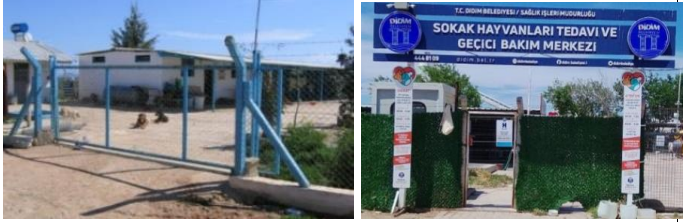
The Belediye built 28 cages, we know them as A and B blocks.
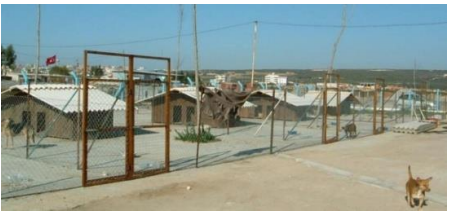
The British Charity of locals filled in all the voids. Raising funds to add the finishing touches.
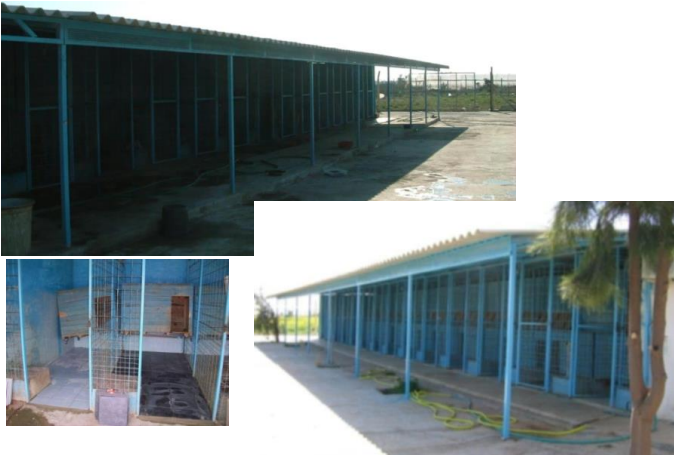
In the beginning, the aim of the shelter ... Didim Sokak Hayvanları Tedavi ve Geçici Bakim Merkesi ... Didim street animals’ treatment and temporary care centre was catch, neuter and release ... To keep the population of street animals down. The community would inform the shelter of dogs needing castration or street carers could take dogs in themselves. Later cats were included. The operations were free of charge for ownerless animals.
Also ownerless animals needing treatments for illness and injury, could be taken for daily treatment or they could be kept in until healthy or fit enough to be released back to the area they were taken from, cats and dogs This was a part of the Turkish animal welfare law no.5199 that protected the street animals.
But an incident in Istanbul in 2023, where a child was attacked by a dog, was to change everything. Almost overnight the law changed and 17 amendments to the section of the 5199 law regarding street animals were made. This included totally removing the section protecting animal welfare officers. Dogs were no longer wanted on the streets and once at the shelter, they were no longer allowed to be released back onto the street.
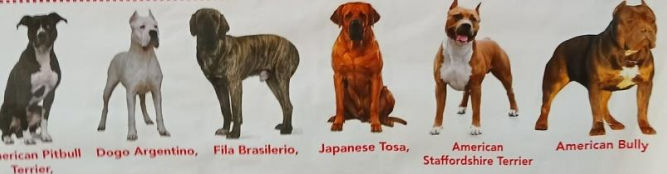
Six breeds of dogs were classed as dangerous and later, after a security guard was ‘bitten’ the mandatory wearing of muzzles for the six breeds of dog was introduced. No muzzle no walking.